8 October 2026
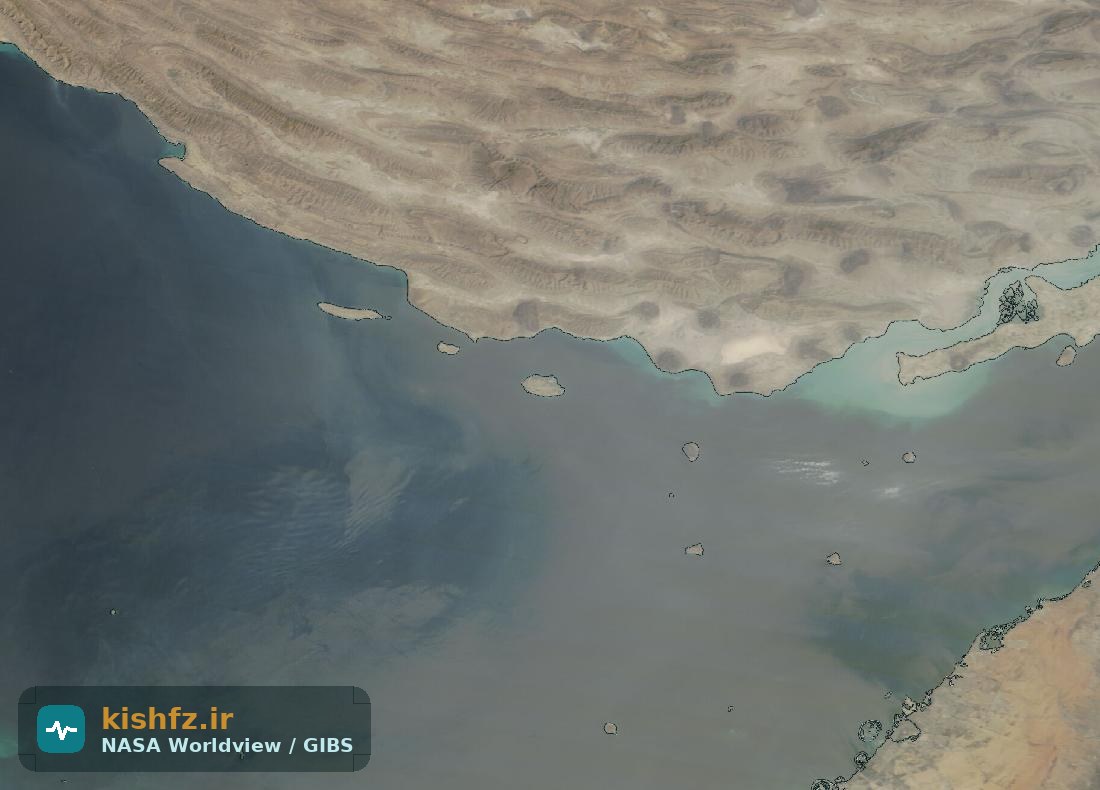
Kish from orbit
True colour, from the MODIS instrument on NASA’s Terra satellite.
NASA Worldview / GIBS
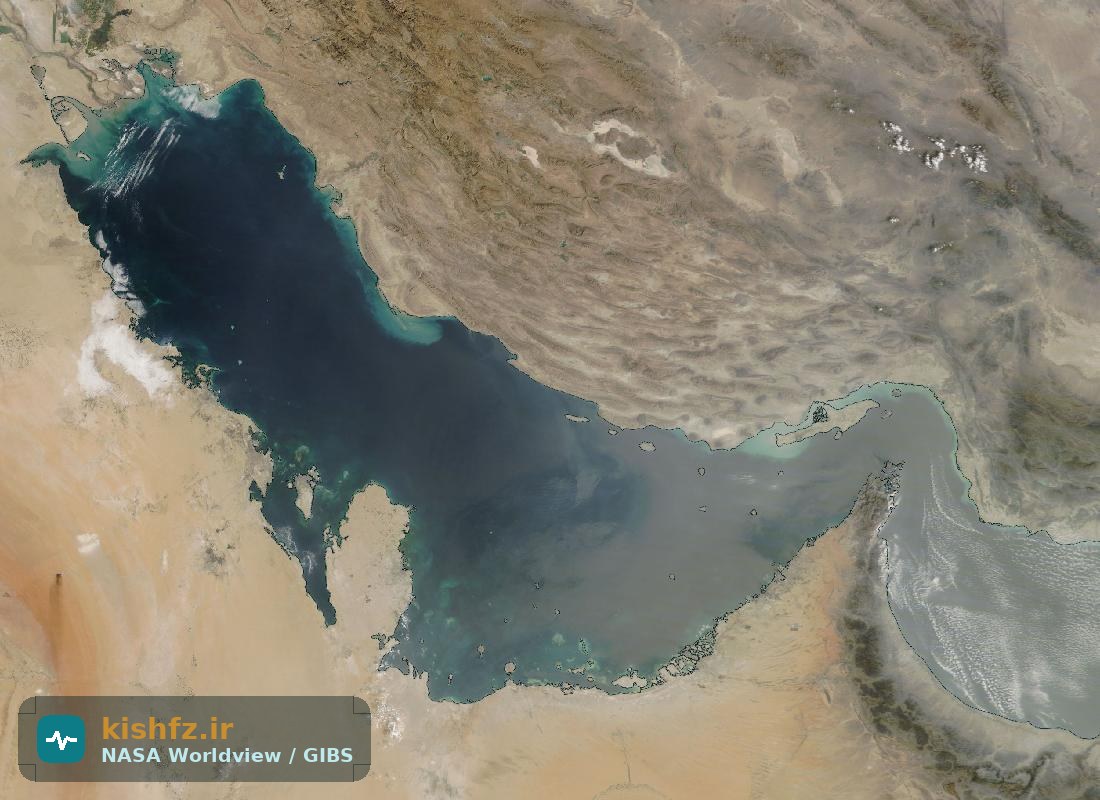
The Persian Gulf by day
The whole Persian Gulf in one pass, with the coastlines drawn on.
NASA Worldview / GIBS
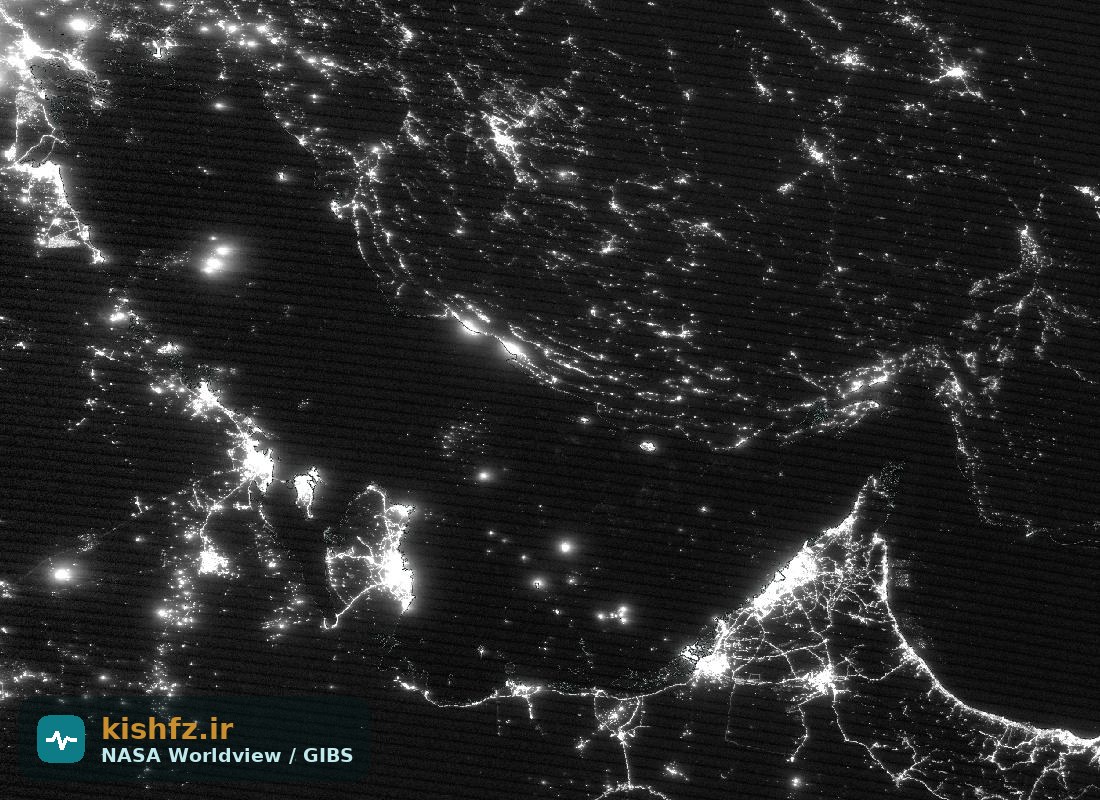
The Persian Gulf at night
VIIRS is sensitive enough to image city light: this is the region drawn by where people are.
NASA Worldview / GIBS

NASA Science
NASA’s Astronomy Picture of the Day.
How was the Saturn system imaged so clearly? Astrophotographer Tom Williams captured such exquisite details due to one night of exceptional atmospheric conditions above the United Kingdom. This means more than a cloudless sky. Pockets of air at different temperatures and densities move around and bend light as it travels through Earth’s atmosphere, distorting astronomy images. This is called “seeing”. Less atmospheric turbulence means clearer images. The astrophotographer reduced the impact of seeing with the lucky imaging technique: thousands of short-exposure images are taken very quickly with a high-speed camera and the clearest images are added up. Which object in this smörgåsbord interests you? Perhaps Titan or the icy stripes of Enceladus? Maybe the gaps and spokes in Saturn’s rings? Saturn's opposition, when Earth passes in between the planet and the Sun, occurred on October 4th. Due to the planet's proximity and full illumination from the Sun, now is a great time of year to observe it!Tomorrow's picture: bumpy
This explanation is in English; it has not been translated.
NASA APOD