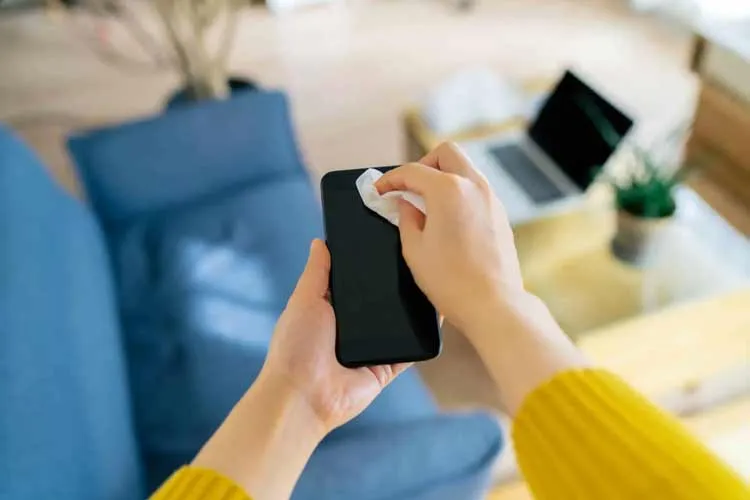
Smartphones have today become an inseparable part of everyday life; for many users, this device is the last thing they touch before sleep and the first thing they pick up in the morning. Regardless of how healthy this habit is, what is beyond doubt is the necessity of keeping the smartphone clean. These devices accompany us everywhere; from the living room to the workplace, parties and even the restroom. Given this kind of use, it is no surprise that, according to experts' findings, an average smartphone is up to 10 times more contaminated with microbes than a toilet bowl. The good news is that properly cleaning a smartphone is very simple and inexpensive.
Why shouldn't you use strong detergents?
Although the smartphone body may at first glance look like a simple glass sandwich, this in no way means that using harsh cleaners such as Windex, compressed air sprays, hydrogen peroxide or even bleach is permitted. These strong chemical compounds can permanently damage the phone's display. More precisely, these substances destroy the display's oleophobic coating; a coating responsible for repelling grease, resisting fingerprints and maintaining the smoothness of the screen surface.
For proper smartphone cleaning, you only need a lint-free microfiber cloth, some water and soap or a 70 percent isopropyl alcohol solution (or specially moistened wipes), whichever is more available.
The correct method to clean a smartphone
Before any action, prepare the cleaning supplies, turn off the phone and if it has a case, remove it. Then gently dip the microfiber cloth in water and soap and wring out the excess water. If using 70 percent isopropyl alcohol, spray the solution onto the cloth, not directly onto the phone. The cloth should be damp, not wet.
Next, using the same cloth gently wipe the entire surface of the phone. Clean around the camera lenses and the side button more carefully, but exercise extra caution when approaching openings such as the USB-C port to prevent moisture ingress. This method is suitable and safe for both the display and the back body of the phone.
How should a phone case be cleaned?
Since most users keep their phone inside a case at all times, it is logical that the case is at least as contaminated as the phone, if not more. The cleaning method for the case depends on its material; for silicone and plastic cases the same water and soap solution or alcohol can be used. But leather cases are an exception, because alcohol causes the leather to dry out and crack; for these types of cases it is better to use a damp cloth with mild soap.
Mistakes to avoid when cleaning your phone
Even when using appropriate materials, you may make mistakes during the cleaning process that carry a high cost. One of the most common mistakes is spraying the cleaning liquid directly onto the device. Any liquid that directly contacts the phone can penetrate through tiny openings around the display, buttons or ports and even in water-resistant phones cause moisture-related damage.
Another important point is to avoid cleaning the phone while it is connected to a charger; the combination of moisture and electric current can be hazardous.
You should also not overuse alcohol wipes, because repeated and unnecessary use, even at the recommended 70 percent concentration, gradually degrades the display's oleophobic coating. Finally, avoid using abrasive cloths or paper towels to clean the phone; unlike microfiber cloths which have a soft, non-abrasive surface, these materials have microscopic abrasiveness and repeated use will gradually create fine scratches that with repetition will become larger and more noticeable.