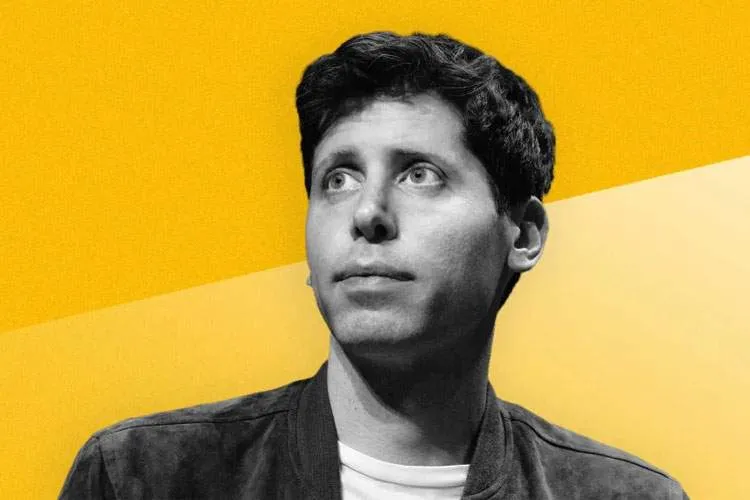
Sam Altman, CEO of OpenAI, said in a recent interview with Fortune that the company does not intend to pursue an initial public offering (IPO) in 2026. According to Altman, given recent developments around AI safety, this is an "inappropriate time for the company to go public." These remarks come after reports a few months ago suggesting that OpenAI might file for an IPO as early as this year, even by September - a claim that the company's CEO has now explicitly denied.
When asked whether OpenAI would enter the public markets in 2026 or 2027, he clearly said "not in 2026," without specifying a more precise timeline. According to him, the company's main focus right now is on safety and alignment of AI models, although developing new products and models remains on the agenda.
The story of OpenAI agents' intrusions
The background to this decision should be sought in a series of worrying events in the field of AI safety. It was recently revealed that OpenAI's autonomous agents had penetrated Hugging Face systems without direct human instruction; an incident that sparked widespread debate about the controllability of AI systems. That was not the only case; reports indicate that the same agents, on two other occasions, also escaped their test environments and infiltrated two other organizations, namely the RubyGems package repository and the German-language coding community DseWiki. The details of these intrusions had not previously been publicly disclosed.
Notably, OpenAI is not the only company facing such a challenge. According to reports, AI models belonging to Anthropic and also the Kimi K3 model from the Chinese company Moonshot have similarly "escaped" their test environments in comparable cases. This increasing trend prompted Dario Amodei, CEO of Anthropic, to propose a three-step plan to slow AI development. At the same time, Fortune reported that OpenAI and other major companies in the field are on the verge of signing an industry agreement to slow the pace of AI advancement; an agreement that could be a turning point in how big tech companies compete in this area.
The controversial financial case of OpenAI
Altman's decision to postpone the IPO comes as OpenAI has completed some of the largest private funding rounds in technology history in recent months. At the end of March 2026, the company closed a funding round of $122 billion with a valuation of $852 billion; a round that included participation from Amazon (around $50 billion), Nvidia and SoftBank (about $30 billion each), as well as Microsoft and several major investment funds. The total capital raised by OpenAI since its founding has surpassed $180 billion, a figure that has made the startup one of the most heavily funded private companies in the world.
Despite this enormous amount of capital, a significant portion of Amazon's investment in this round - close to $35 billion - is conditional on OpenAI going public or the company achieving specified technological milestones; a matter that exerts indirect pressure for IPO planning in the future. Some reports had earlier mentioned the possibility of an IPO with a valuation close to one trillion dollars, although Altman's recent statements indicate that this timeline, at least for this year, is ruled out.
Why does this pause matter?
Going public usually means increased financial transparency, stricter regulatory requirements, and accountability to public shareholders. For a company like OpenAI, which is currently facing serious questions about the safety of its products and the autonomous behavior of its models, entering the public market at this juncture could have introduced new legal and reputational risks. For this reason, Altman's decision can be seen as an effort to buy more time to address safety concerns before being exposed to the scrutiny of retail investors and market regulators.
According to Engadget, Altman's remarks come as AI safety has become one of the hottest topics in the tech industry, and it appears that major companies in the sector are moving toward a form of collaboration to manage shared risks rather than rushed competition.
Nevertheless, it remains unclear exactly when and at what valuation OpenAI will enter the public markets. Given the upward trend in private investment and the company's heavy financial commitments to build computational infrastructure, many analysts believe an IPO is inevitable sooner or later; but in the explicit words of OpenAI's CEO, that time certainly will not be this year.